
When guests visit Johnson Estate Winery, they often see rows of mature grapevines stretching across the landscape, producing the wines they enjoy today. What many people don’t see is the years of preparation that happen before a new vineyard ever produces its first cluster of grapes.
Replacing an old vineyard is not as simple as removing vines and planting new ones. A successful vineyard begins with healthy soil, careful planning, and patience. Every decision we make today impacts the vines that will grow for decades to come.
At Johnson Estate Winery, preparing a new vineyard is a long-term investment in the future of our estate, our wines, and the generations of the Johnson family who have cared for this land for more than 60 years.
Like any agricultural crop, grapevines have a productive lifespan. Over time, vines may become less vigorous, production can decline, or changing conditions may lead us to consider planting a different variety that is better suited for the site.
When we remove an old vineyard, we are not simply replacing plants. We are preparing the land for the next generation of vines.
The goal is always the same: create the healthiest possible environment so young vines can establish strong roots and produce exceptional grapes for many years.
After the final harvest from an old vineyard, the first step is carefully removing the existing vineyard infrastructure.
This includes:
While an empty vineyard may look like the end of something, it is actually the beginning of a new chapter.
Healthy vineyards begin below the surface.
Before planting new vines, we spend several years improving soil structure, increasing organic matter, and preparing the field for the demands of a new vineyard. The foundation of a great vineyard starts long before the first vine is planted, and cover crops play an important role in this process.
Last year, we planted sorghum-sudangrass, a vigorous grass crop that can grow several feet tall and develop an extensive root system. These roots help break up compacted soil, improve soil structure, and add valuable organic material back into the ground when incorporated.
This year, we planted buckwheat in one of our future vineyard sites located next to our historic Ice Wine Vidal Blanc vineyard. While visitors may see a field of delicate white flowers, this cover crop is actively helping us prepare the land for the next generation of grapevines.

Buckwheat is a fast-growing cover crop that provides several benefits:
And while the benefits to the vineyard are what make buckwheat a valuable part of our soil preparation process, there is another reason it has quickly become a favorite around the estate. Jennifer especially enjoys seeing the delicate white flowers blooming throughout the vineyard. Beyond their beauty, those flowers provide an important food source for pollinators and beneficial insects that contribute to a healthier vineyard environment.
By using different cover crops depending on the needs of each field, we are actively improving the land and creating better growing conditions for future grapevines.
As an estate winery, we have the unique opportunity to recycle materials created right here on the property.
After harvest and grape processing, we return pomace, the grape skins, seeds, and remaining plant material from pressing directly back to the vineyard.
Instead of considering this material waste, we view it as a valuable resource. Pomace adds organic matter to the soil and helps rebuild the biological activity needed for healthy plant growth.
The same grapes that become wine eventually help prepare the ground for future vineyards.
After several seasons of improving the soil, the field is finally ready for planting preparation.
Before a single vine goes into the ground, we:
Growing grapes along Lake Erie comes with unique challenges. Our climate provides many advantages, but wet spring conditions mean proper water management is critical.
Installing drainage before planting helps protect the future vineyard by allowing excess water to move away from the vines’ root systems.
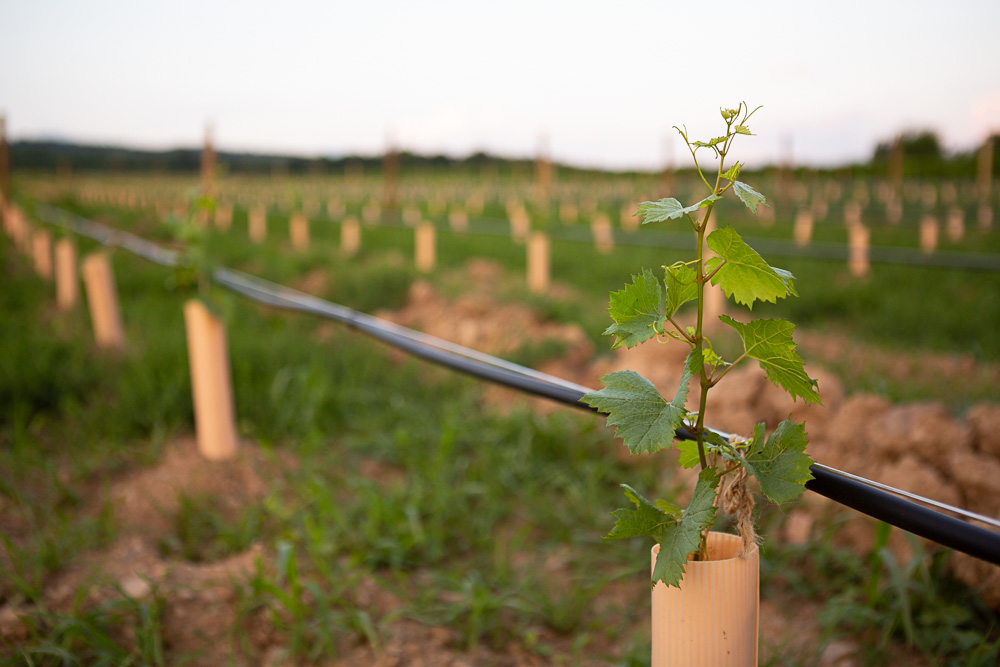
Once the soil and field are ready, thousands of young grapevines are planted.
The process continues with:
At this point, the vineyard begins to take shape, but the hardest part is still ahead.
One of the biggest surprises for many vineyard visitors is learning that newly planted vines do not immediately produce a harvest.
During the first years of growth, we focus on building strong vines rather than harvesting fruit.
Young vines need time to develop:
In many cases, fruit clusters are removed during the early years so the plant can focus its energy on growth.
This patience is essential. A strong foundation today creates a healthier and more productive vineyard for decades.

One example of this long-term approach can be seen in our Chardonnay vineyards. Establishing a new vineyard is a commitment that requires patience, planning, and a vision for the future. From preparing the soil and planting cover crops to nurturing young vines through their first years of growth, every step is designed to create the foundation for exceptional fruit.
Today, those efforts are reflected in the Chardonnay wines we produce from our estate vineyards. Our Chardonnay vines have benefited from careful site selection, thoughtful vineyard management, and years of dedication to developing healthy, balanced vines.
The result is two distinct expressions of our estate Chardonnay. Bright Steel Chardonnay showcases the fresh, vibrant side of the variety with crisp acidity and a focus on the natural character of the fruit. Toasted Oak Chardonnay highlights the richness and complexity that come from thoughtful winemaking and oak aging.
Both wines begin in the vineyard, where years of preparation and care shape the grapes long before they ever reach the winery.
From removing an old vineyard to harvesting grapes from new vines, the process can take many years.
The timeline often looks like this:
Year 1: Remove old vines and vineyard infrastructure
Year 2: Plant cover crops and begin rebuilding soil health
Year 3: Continue improving the field and preparing for planting
Year 4: Install vineyard infrastructure and plant new vines
Years 5–6: Train vines and establish healthy growth
Year 6 and beyond: Begin harvesting grapes from the new vineyard
At Johnson Estate Winery, every vineyard we plant is an investment in the future, not just for our business, but for the land that has sustained our family for generations.
As a third-generation family farm winery and New York State’s oldest estate winery, our vineyards tell the story of our family. Over the decades, each generation of Fred Johnson has planted vineyards that continue to produce exceptional grapes today. Walking through our estate means walking through the legacy of three generations, each leaving their mark on the land and preparing it for the next.
Preparing a new vineyard takes years of careful planning, patience, and stewardship. By rebuilding healthy soils, planting cover crops, improving drainage, and giving young vines time to establish strong roots, we’re creating vineyards that can thrive for 30 years or more.
This long-term approach reflects the values that have guided Johnson Estate Winery from one generation to the next. We believe in caring for the land, investing in its future, and leaving it even better than we found it for those who will farm it after us.
When you drink a bottle of Johnson Estate wine, you’re tasting more than a single vintage. You’re experiencing the result of decades of thoughtful farming, generations of family dedication, and vineyards planted by three generations of the Johnson family.
Want to learn more about where our wines begin?
Visit the Johnson Estate Winery Tasting Room, open year-round, and discover the story behind New York State’s oldest estate winery. Taste our award-winning wines, learn about our vineyards, and experience the history and traditions that have shaped our family farm for three generations.
If you’re visiting during the summer months, be sure to ask about our guided Estate Tours, where you can walk through the vineyards and see firsthand how Lake Erie’s unique climate, our soils, and generations of careful stewardship come together to produce exceptional wines.
Whether it’s your first visit or your fiftieth, we look forward to welcoming you to Johnson Estate Winery and sharing the passion that goes into every bottle.
8419 West Main Rd. (Route 20)
Westfield, NY 14787
Map & Directions
March – October
10am-6pm Daily
November – February
10am-5pm Sunday-Thursday
10am-6pm Friday & Saturday
Closed Thanksgiving, Christmas, New Year’s Day, and Easter
Keep up to date on the latest wine releases, events, and promotions!