
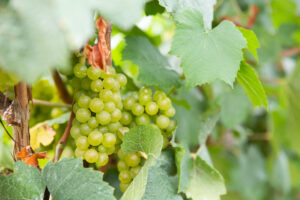
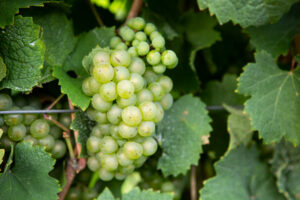
Chardonnay is the most fashionable white wine variety in the world. A fairly vigorous variety, Johnson Estate planted its first Chardonnay in 2013 and hand-picked the first harvest from the young vines in 2016. It forms a small, relatively compact, winged-cylindrical cluster of small berries, not as densely closed as that of Pinot Noir.
The Wines: Toasted Oak Chardonnay and Bright Steel Chardonnay
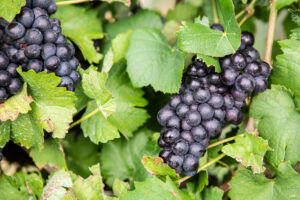
At Johnson Estate Winery, our Pinot Noir brings a touch of Burgundy-inspired elegance to the Lake Erie shore. This delicate red grape variety—distinguished by its tight, pine-cone shaped clusters—thrives in our cooler climate, producing a wine that is both expressive and sophisticated. To ensure a balanced and aromatic profile, our vineyard features three distinct Pinot Noir clones on grafted rootstock, specifically selected to create a complex, well-rounded finish that rivals the renowned styles of Oregon and France.
The Wine: Pinot Noir and Founders' Red
This variety is a shy cropper, but is disease resistant. The long delicate bunches ripen late and develop excellent flavors during our moderate and extended Germanic summers and autumns.
The Wines: Black Locust Reserve Dry Riesling, Dry Riesling, Semi-Dry Riesling, and Sweet Riesling
The Chambourcin wine grape was developed in France in the late 1800’s. There were only a couple hundred acres planted in the United States in the 1970’s, but its popularity grew considerably in the late 1980’s. Chambourcin yields good crops of small navy blue berries with long, loosely clustered bunches that ripen late during the harvest season.
The Wines: Chambourcin, Chambourcin Ice Wine, Ruby Dry Rose, and Sparkling Rosé Ice Wine
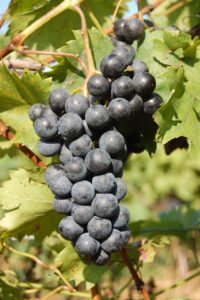
Chancellor is a classic dry red wine grape developed in France during the late 1800s. Chancellor is a vigorous and fruitful vine that produces excellent dark, rich wines. Its susceptibility to disease in hot, humid locations limits the Chancellor's successful cultivation in the east. The cooling and drying Lake Erie breezes that continuously blow over Johnson Estate result in an excellent microclimate for Chancellor. The grape clusters are long and loose, with medium-sized berries that ripen in midseason.
The Wines: Founders' Red, Pink Catawba, Queen's Catawba, House Red, Proprietor’s Red, Ruby Port, and Old Oak Ruby
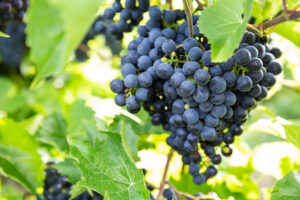
The Maréchal Foch (pronounced "mar-esh-shall-fosh") wine grape, named after the famous World War I French marshal ("maréchal") Ferdinand Foch, is relatively vigorous, fungal resistant, and cold-hardy. It is susceptible to ozone pollution and appreciates irrigation for its relatively shallow roots. It was developed from crossing White Riesling, Burgundy, Gamay, and Pinot Noir grapes. The small berries are the first in our vineyards to ripen. Maréchal Foch is used to make a variety of styles of wine, including a light red wine similar to Beaujolais, an extracted wine with intense dark "inky" purple color and unique varietal character as well as sweet, fortified, port-style wines. Wines made from Maréchal Foch tend to have strong acidity, aromas of black fruits and, in some cases, toasted wheat, mocha, fresh coffee, bitter chocolate, vanilla bean, and musk.
The Wines: Maréchal Foch, WTF Marechal Foch, and House Red.
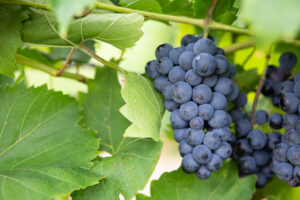
Seyval Blanc, released in 1919, has become the premier French-American white wine grape in the east as well as in England. It is considered by many to be one of the finest of the French-American hybrids and is the most widely-used hybrid in white wines. It ripens mid-season to large, compact, conical bunches of slightly elliptical greenish-yellow berries. A well-made Seyval blend can compete favorably with Chardonnay or Sauvignon Blanc.
The Wines: Seyval Blanc, Hand-Picked Seyval Blanc, Cream Sherry, Old Oak Gold, Solstice Sangria, and Passionate Peach
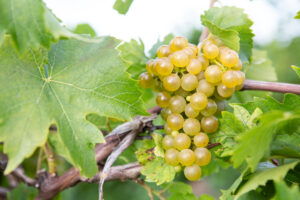
A hybrid of Seyval and Gewürztraminer crossed by Herb C. Barrett circa 1965. He sent seed from the cross to the New York State Agricultural Experiment Station grape breeding program at Cornell for development. It was found to have excellent wine quality, combined with good productivity, partial resistance to several fungal diseases, and cold hardiness superior to its acclaimed parent, Gewurztraminer, while retaining a similar character. The vines are productive with attractive blush-colored fruit that makes aromatic, floral wines.
The Wines: Traminette and Sparkling Traminette
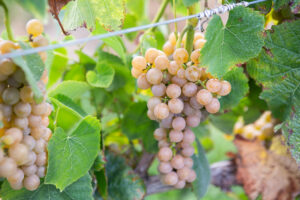
Frenchman J.L. Vidal crossed the famous Trebbiano with another hybrid in Bordeaux in the late 1800s. Vidal Blanc has very long cylindrical clusters, almost always shouldered, that are tightly packed with small greenish-white berries with dark brown spots. We make two German-style white wines with the Vidal Blanc. Our multiple award-winning semi-dry Vidal Blanc is comparable to a dry Riesling from the Mosel Region in Germany.
The Wines: Vidal Blanc, Vidal Blanc Ice Wine, Sparkling Rosé Ice Wine, Maple Liqueur, and Blueberry Liqueur
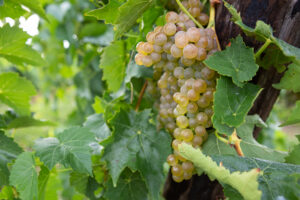
The Concord grape was developed by Ephriam Bull, the “father of the Concord grape” in Concord, Massachusetts in 1849, after testing more than 22,000 vines, mostly Vitis labrusca. More recent genetic testing has shown that the Concord grape has roughly one-third Vitus vinifera parentage as well as Catawba, a Vitus labrusca. Mr. Bull’s Concord grape won first place in the Boston Horticultural Society Exhibition in 1853 and it was introduced to the general public in 1854.
CONCORD GRAPE JUICE
In 1869, a New Jersey dentist, Dr. Thomas Welch made pasteurized Concord juice, heating the juice enough to kill any pathogens and making the first “unfermented grape juice”. Concord had been planted in Western NY beginning in the 1870’s. Dr. Welch and son moved to Western NY in 1897 from Watkins Glen. By 1913, Drs. Thomas and Charles Welch had made the Concord grape a household name, Westfield became known as the "Grape Juice Capitol of the World."
CONCORD GRAPE BELT
The largest Concord grape region in the world is right here in Western New York and Pennsylvania. Generally known as a juice and jam grape, Johnson Estate proudly uses this grape in our very high quality and popular house wines.
The Wines: Proprietor's Red, Pink Niagara, Solstice Sangria, House Red, Concord, and Red Ipocras
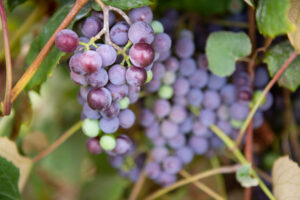
The Delaware grape is our most plentiful at just over 20 acres. The founder of Johnson Estate, Fred Johnson, originally planted this reddish small-clustered grape for the production of champagne to be sold at a large winery in the Finger Lakes (Taylor Winery). It is a delicious and favorite eating grape. We use the Delaware as a semi-dry varietal in our very famous late harvest wine, Liebestropfchen.
The Wines: Liebestropfchen, Proprietor’s Red, White Ipocras, Cream Sherry, and Old Oak Gold
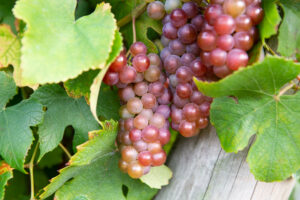
Ives has a dense color and rich grapey flavor. It was introduced by Henry Ives III of Cincinnati, Ohio in 1840 and planted along the banks of the Ohio River during the 1850s. The grand New York State "port" wines, popular after the repeal of Prohibition through the 1960s, were dependent on Ives. Recently, the growing of Ives has become difficult since is very susceptible to damage from ever increasing air pollution. We have found that irrigation and summer sprays of foliar nutrients have overcome much of the effects of ozone air pollution.
The Wines: Ives, Pink Niagara, The King's Ives, and House Red
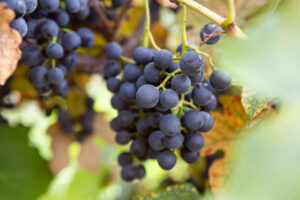
Niagara is frequently used as a juice grape. We use it exclusively in our House Wines, where it imparts a grapey, fruity flavor. The yellow-green grape was developed by researchers in Niagara County, NY during the 1860s. It is a Native American hybrid - a cross between the Concord and Cassady grapes.
The Wines: Niagara, Pink Niagara, and White Ipocras
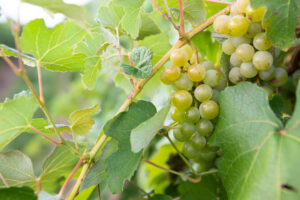
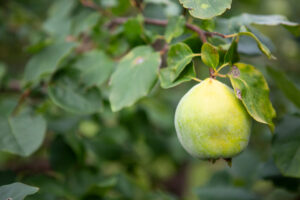
Growing along the ridge of Freeling’s Creek and throughout our estate gardens, our collection of Quince trees produces aromatic, golden fruit that thrives in the unique microclimate of our grounds.
Products: Estate Made Quince Paste