

Looking for fall activities in Western New York? There is something special about fall at Johnson Estate Winery. Located in Westfield, NY, in the heart of Lake Erie Wine Country, our vineyard offers a chance to experience the changing season with wine, harvest activities, vineyard walks, outdoor relaxation, and beautiful fall scenery.
Fall is an especially beautiful time to visit a winery in Western New York, when harvest, changing leaves, and cooler temperatures create a completely different experience than summer.
As the seasons begin to change, the vineyard takes on a different character. Grapes ripen across the estate, harvest gets underway, the air begins to cool, and the landscape slowly transforms from the greens of summer into the colors of autumn.
Whether you want to explore the vineyard, pick grapes right from the vine, enjoy a glass of wine outdoors, or simply take in the fall scenery, there are plenty of ways to experience autumn at Johnson Estate.
Fall brings a different energy to Johnson Estate Winery. The vineyard is active with harvest, the winery is preparing for another vintage, and the landscape begins its transition from summer into autumn.
As an estate winery, harvest is an important part of what we do. The grapes grown here will become the wines we enjoy in the seasons ahead, making a visit during harvest a chance to see a working winery at one of its busiest and most exciting times of year.
Throughout the fall, you can watch the vineyard change as harvest progresses and enjoy the sights, sounds, and atmosphere of wine country during this special time of year.
And if you want to get a little closer to the harvest, our Grape Picking & Vineyard Walk lets you step into the vineyard and experience it for yourself.
Our Grape Picking & Vineyard Walk offers another way to experience the vineyard during harvest season.
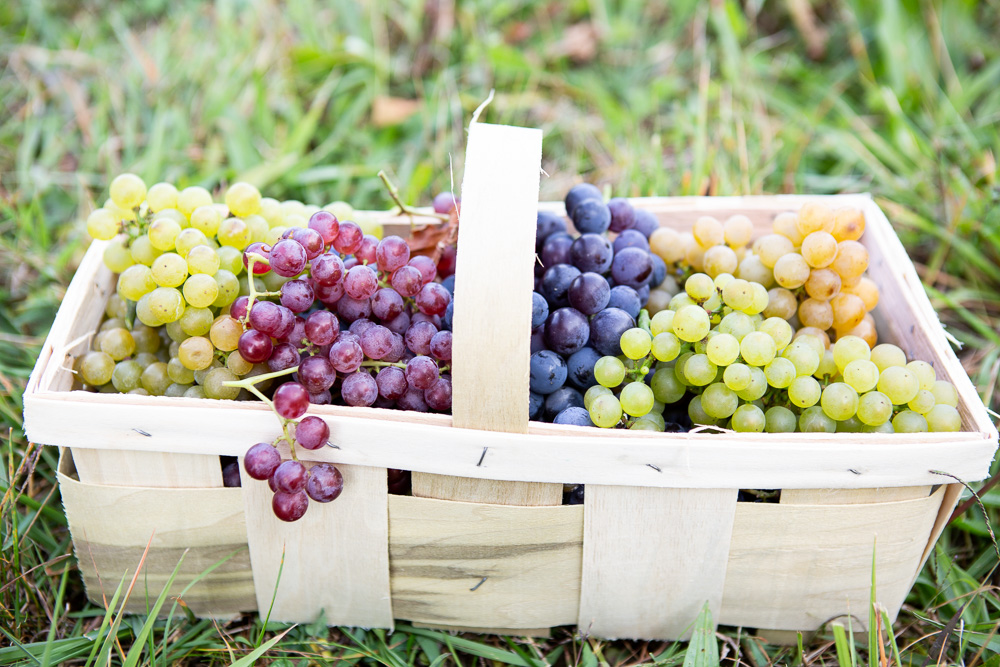
With 13 grape varieties growing across the estate, the vineyard is constantly changing as different grapes reach ripeness. Depending on when you visit, you might encounter varieties such as Chambourcin, Marechal Foch, Pinot Noir, Chancellor, or Vidal Blanc, giving you a chance to see and experience some of the grapes that are part of Johnson Estate’s estate wine program.
The experience changes from week to week as harvest moves through the vineyard, making an early fall visit different from one later in the season.
After your vineyard walk, relax with a glass of Red Ipocras blended with local apple cider, included with your experience.
If you’d rather enjoy the vineyard at a slower pace, our Mulled Wine & Vineyard Walk offers a relaxing way to experience the changing season.
Take a self-guided walk through the vineyard with a warm glass of Red Ipocras blended with local apple cider. In September, experience the sights and smells of harvest as grapes ripen and the vineyard comes alive with activity. As the season progresses, the landscape begins to change, bringing the colors and crispness of fall to the vineyard.
It’s a chance to slow down, take a walk, and enjoy the vineyard at your own pace.
Fall is one of the best times to explore Western New York. From changing leaves and outdoor walks to local wineries, farms, and seasonal experiences, there are plenty of ways to enjoy the season.
At Johnson Estate Winery in Westfield, you can make a fall afternoon of it. Explore the vineyard, pick grapes during harvest, take a self-guided vineyard walk, enjoy a glass of wine outside at FLIGHT, or settle into the Tasting Room and discover a new favorite wine.
Located in Chautauqua County, Johnson Estate Winery is an easy fall destination for visitors from Buffalo, Erie, and throughout Western New York and Northwestern Pennsylvania. A visit offers a chance to combine wine country with the beauty of the changing season
Looking for family-friendly fall activities or things to do with kids in Western New York? A day at Johnson Estate is a great way to get outside and enjoy the changing season together.
Children are welcome to explore the vineyard, discover the different grapes growing throughout the estate, and experience the sights and sounds of harvest season. Children are free with the purchase of an adult ticket for our vineyard experiences, making it an easy addition to a family fall day trip.
There is plenty of room to walk, explore, and enjoy the outdoors, whether your family chooses to pick grapes, take a vineyard walk, or simply spend time enjoying the scenery.

Fall adventures are better when the whole family can come along, including the four-legged members.
Johnson Estate is dog-friendly, and well-mannered dogs are welcome to join you as you enjoy the vineyard. Dogs must remain on a leash and under their owner’s control while on the property.
Take a walk through the vineyard, enjoy the crisp fall air, and make a day of exploring Lake Erie Wine Country together.
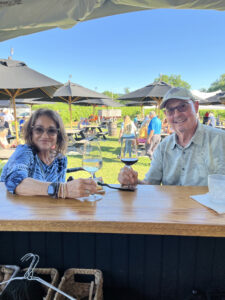
Fall doesn’t mean the end of outdoor wine country.
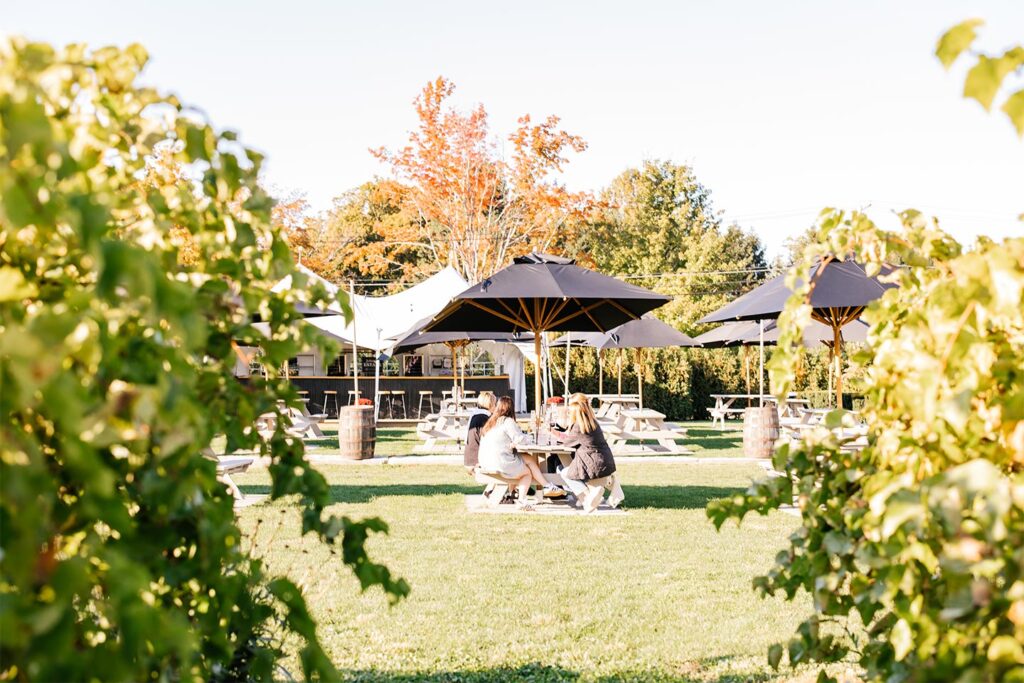
FLIGHT, our outdoor tasting experience at Johnson Estate, is a great place to settle in with a glass of wine and enjoy the vineyard surroundings.
On a crisp fall afternoon, grab a seat, enjoy a glass or flight of wine, and take some time to simply relax outside. Pair your wine with a charcuterie board and enjoy the scenery as the season begins to change around you.
FLIGHT is open Friday through Sunday from 11 AM to 5 PM until Columbus Day, giving you another reason to make a fall weekend trip to the winery.
If the weather is a little too cool for sitting outside, the Johnson Estate Tasting Room is open daily from 10 AM to 6 PM.
With a selection of 33 estate-grown wines and other favorites to explore, fall is a great time to stop in, sample something new, and find a wine to take home.
Whether you’ve been visiting Johnson Estate for years or are discovering us for the first time, the Tasting Room is a comfortable place to spend part of a fall afternoon.
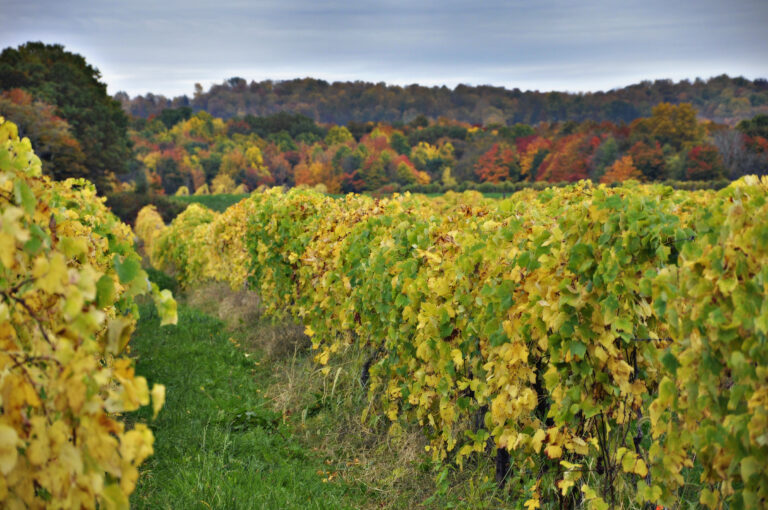
One of the best parts of visiting the vineyard in fall is watching the landscape change.
Early in the season, the vineyard is still full of summer’s green, with grapes ripening throughout the property and harvest beginning. As the weeks go by, the landscape gradually takes on warmer autumn colors.
The changing leaves, cooler temperatures, ripening grapes, and activity of harvest all become part of the experience.
You might visit in September and see grapes being harvested, then return in October to find the vineyard transformed by fall foliage.
That’s part of what makes autumn in wine country so enjoyable. The season is always changing.
Looking for fall activities near Buffalo or Erie, PA? Johnson Estate Winery makes a great destination for a fall day trip from Buffalo, Erie, and communities throughout Western New York and northwestern Pennsylvania.
Spend the afternoon exploring the vineyard, picking grapes, enjoying a glass of wine, or simply taking in the scenery. You can make your visit as active or as relaxed as you like.
For families, couples, friends, wine lovers, and anyone looking for a reason to get outside and enjoy the season, fall offers a unique way to experience Johnson Estate.
From the first grapes of harvest to the last colorful leaves of autumn, fall brings a special energy to Johnson Estate Winery.
Come explore the vineyard. Pick some grapes. Take a walk. Enjoy a glass of wine outside at FLIGHT. Settle into the Tasting Room. Watch the landscape change around you.
However you choose to spend your afternoon, come experience fall in the vineyard at Johnson Estate Winery.
There’s something special about experiencing grape harvest season firsthand. This fall, you can go beyond simply watching the harvest and pick grapes right from the vine at Johnson Estate Winery in Westfield, New York. Our Grape Picking & Vineyard Walk gives visitors a hands-on way to experience harvest season in the heart of Lake Erie Wine Country.
Instead of simply watching grapes being harvested, imagine walking through the vineyard, finding ripe clusters, cutting them right from the vine, and taking them home with you.
Every fall, our vineyard becomes a busy and exciting place as we harvest grapes that will eventually become wine. As an estate winery, we grow the grapes right here on our farm that are used in our estate wines. With over 100 acres of grapes growing across the property, harvest season brings something new to discover throughout the vineyard.
Our Grape Picking & Vineyard Walk gives you the opportunity to explore the vineyard at your own pace, pick ripe grapes directly from the vines, and take them home to enjoy.
You’ll receive a grape-picking basket, vineyard trail map, and pruners to borrow so you have everything you need to explore the vineyard and carefully cut grape bunches from the vines.
One of the fun parts of visiting during harvest season is that the vineyard changes from week to week.
With 13 different grape varieties growing at Johnson Estate, there is always something new to discover. You may find American classics like Concord and Niagara, along with other varieties grown on our estate such as Seyval Blanc and Ives. Different grapes ripen at different times, so the varieties available for picking will depend on the date of your visit and what is ripe and ready that day.
You may discover a familiar favorite or find yourself tasting a grape you’ve never experienced before. Ever wonder which grape is behind your favorite Johnson Estate wine? This is your chance to taste some of the grapes that go into the wines you enjoy and experience them in a whole new way, right from the vine. Each variety has its own color, flavor, and character, making your walk through the vineyard a chance to explore the diversity of grapes we grow right here on our farm.
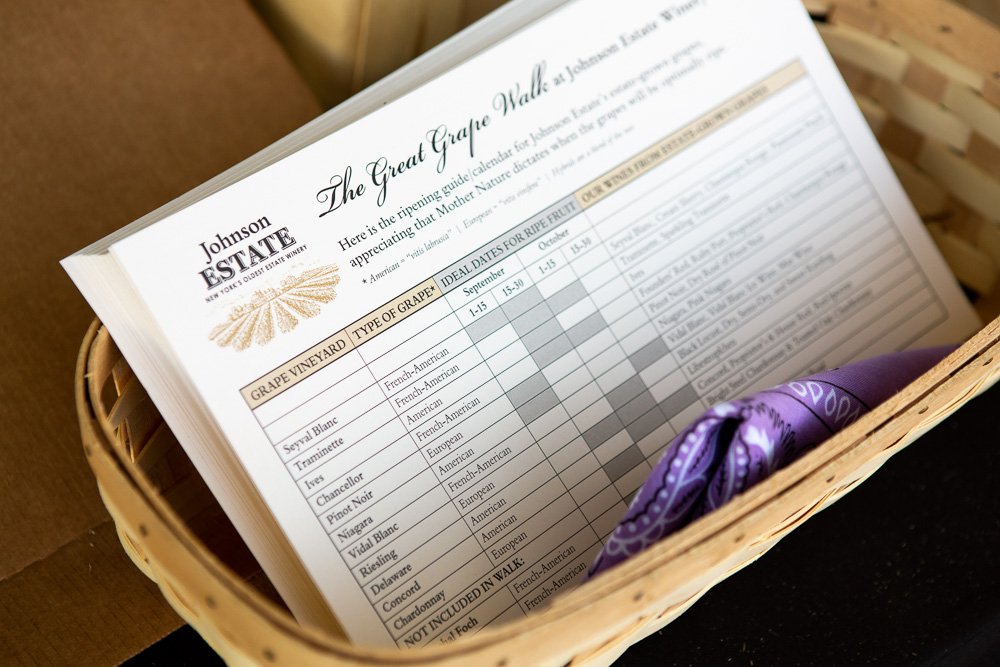
If you’ve never picked grapes before, it’s a surprisingly simple and enjoyable experience.
You’ll receive your picking basket, vineyard map, and a pair of pruners to borrow for cutting the grape bunches from the vine. Follow the map through the vineyard, look for the grapes that are ready, and pick them directly from the vines. On the back of the map is a chart that recommends which varieties are likely to be ready based on the date of your visit.
Not sure if a grape is ready? Look for grapes that have developed their characteristic color, taste one, and see if it has the sweetness and flavor you enjoy. Since our 13 varieties ripen at different times, you may find some grapes ready to pick while others are still developing.
There’s no need to rush. This is a self-guided vineyard experience, so you can take your time, enjoy the scenery, and experience the vineyard at your own pace.
And unlike a traditional vineyard tour, you get to leave with a little piece of the harvest.
Grape picking is a fun way to get outside and experience something a little different this fall.
Kids are welcome to join the experience and explore the vineyard with you. They can see the grapes growing on the vines, learn about the different varieties, and experience what harvest season is like on a working farm and estate winery.
Kids are free to participate, and we’ll provide a cup of cider for them to enjoy. It’s a simple way to spend part of a fall afternoon together while enjoying the vineyard and the changing season.
Fall vineyard walks are better with your four-legged companion.
Well-mannered dogs are welcome to join you as you explore the vineyard. Dogs must remain on a leash and under their owner’s control throughout the experience.
After exploring the vineyard and picking your grapes, come back and warm up with a glass of warmed Red Ipocras blended with local apple cider, included with your Grape Picking & Vineyard Walk experience.
It’s the perfect way to finish a fall afternoon at the winery.
Looking for a unique fall activity near Buffalo? Johnson Estate Winery is located in Westfield, New York, in the heart of Lake Erie Wine Country.
If you’re looking for fall things to do in Western New York, a visit to Johnson Estate during harvest season is a chance to combine a vineyard experience, outdoor walk, grape picking, and a taste of Lake Erie Wine Country.
Our location makes the winery an easy destination for a fall day trip from Buffalo, Erie, and communities throughout Western New York and northwestern Pennsylvania.
A visit during harvest season gives you the opportunity to experience the vineyard when it is at its busiest, with grapes ripening throughout the property and the landscape beginning to take on the colors of fall.
Our Grape Picking & Vineyard Walk is available Saturdays and Sundays from 11 AM to 4 PM during the fall season.
$25 per person | Wine Club Members $20
Your experience includes:
Simply arrive anytime between 11 AM and 4 PM on the date of your ticket, check in, receive your basket, pruners, and vineyard map, and head out to explore.
Because grape ripeness changes throughout the harvest season, the varieties available for picking will vary by date.
Come pick, stroll, sip, and experience harvest season at Johnson Estate Winery.
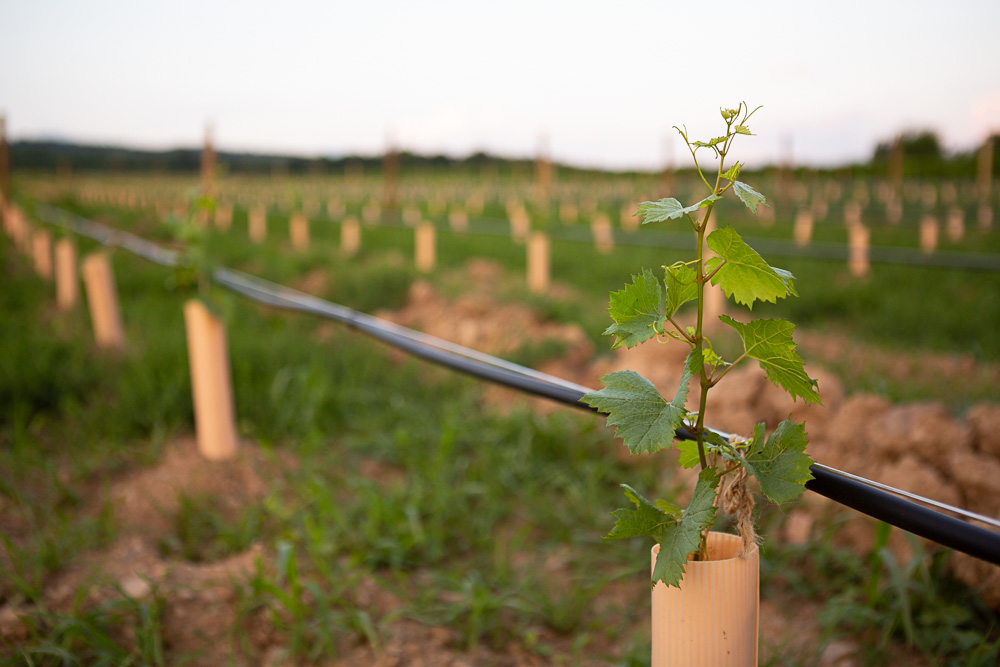
When guests visit Johnson Estate Winery, they often see rows of mature grapevines stretching across the landscape, producing the wines they enjoy today. What many people don’t see is the years of preparation that happen before a new vineyard ever produces its first cluster of grapes.
Replacing an old vineyard is not as simple as removing vines and planting new ones. A successful vineyard begins with healthy soil, careful planning, and patience. Every decision we make today impacts the vines that will grow for decades to come.
At Johnson Estate Winery, preparing a new vineyard is a long-term investment in the future of our estate, our wines, and the generations of the Johnson family who have cared for this land for more than 60 years.
Like any agricultural crop, grapevines have a productive lifespan. Over time, vines may become less vigorous, production can decline, or changing conditions may lead us to consider planting a different variety that is better suited for the site.
When we remove an old vineyard, we are not simply replacing plants. We are preparing the land for the next generation of vines.
The goal is always the same: create the healthiest possible environment so young vines can establish strong roots and produce exceptional grapes for many years.
After the final harvest from an old vineyard, the first step is carefully removing the existing vineyard infrastructure.
This includes:
While an empty vineyard may look like the end of something, it is actually the beginning of a new chapter.
Healthy vineyards begin below the surface.
Before planting new vines, we spend several years improving soil structure, increasing organic matter, and preparing the field for the demands of a new vineyard. The foundation of a great vineyard starts long before the first vine is planted, and cover crops play an important role in this process.
Last year, we planted sorghum-sudangrass, a vigorous grass crop that can grow several feet tall and develop an extensive root system. These roots help break up compacted soil, improve soil structure, and add valuable organic material back into the ground when incorporated.
This year, we planted buckwheat in one of our future vineyard sites located next to our historic Ice Wine Vidal Blanc vineyard. While visitors may see a field of delicate white flowers, this cover crop is actively helping us prepare the land for the next generation of grapevines.

Buckwheat is a fast-growing cover crop that provides several benefits:
And while the benefits to the vineyard are what make buckwheat a valuable part of our soil preparation process, there is another reason it has quickly become a favorite around the estate. Jennifer especially enjoys seeing the delicate white flowers blooming throughout the vineyard. Beyond their beauty, those flowers provide an important food source for pollinators and beneficial insects that contribute to a healthier vineyard environment.
By using different cover crops depending on the needs of each field, we are actively improving the land and creating better growing conditions for future grapevines.
As an estate winery, we have the unique opportunity to recycle materials created right here on the property.
After harvest and grape processing, we return pomace, the grape skins, seeds, and remaining plant material from pressing directly back to the vineyard.
Instead of considering this material waste, we view it as a valuable resource. Pomace adds organic matter to the soil and helps rebuild the biological activity needed for healthy plant growth.
The same grapes that become wine eventually help prepare the ground for future vineyards.
After several seasons of improving the soil, the field is finally ready for planting preparation.
Before a single vine goes into the ground, we:
Growing grapes along Lake Erie comes with unique challenges. Our climate provides many advantages, but wet spring conditions mean proper water management is critical.
Installing drainage before planting helps protect the future vineyard by allowing excess water to move away from the vines’ root systems.
Once the soil and field are ready, thousands of young grapevines are planted.
The process continues with:
At this point, the vineyard begins to take shape, but the hardest part is still ahead.
One of the biggest surprises for many vineyard visitors is learning that newly planted vines do not immediately produce a harvest.
During the first years of growth, we focus on building strong vines rather than harvesting fruit.
Young vines need time to develop:
In many cases, fruit clusters are removed during the early years so the plant can focus its energy on growth.
This patience is essential. A strong foundation today creates a healthier and more productive vineyard for decades.

One example of this long-term approach can be seen in our Chardonnay vineyards. Establishing a new vineyard is a commitment that requires patience, planning, and a vision for the future. From preparing the soil and planting cover crops to nurturing young vines through their first years of growth, every step is designed to create the foundation for exceptional fruit.
Today, those efforts are reflected in the Chardonnay wines we produce from our estate vineyards. Our Chardonnay vines have benefited from careful site selection, thoughtful vineyard management, and years of dedication to developing healthy, balanced vines.
The result is two distinct expressions of our estate Chardonnay. Bright Steel Chardonnay showcases the fresh, vibrant side of the variety with crisp acidity and a focus on the natural character of the fruit. Toasted Oak Chardonnay highlights the richness and complexity that come from thoughtful winemaking and oak aging.
Both wines begin in the vineyard, where years of preparation and care shape the grapes long before they ever reach the winery.
From removing an old vineyard to harvesting grapes from new vines, the process can take many years.
The timeline often looks like this:
Year 1: Remove old vines and vineyard infrastructure
Year 2: Plant cover crops and begin rebuilding soil health
Year 3: Continue improving the field and preparing for planting
Year 4: Install vineyard infrastructure and plant new vines
Years 5–6: Train vines and establish healthy growth
Year 6 and beyond: Begin harvesting grapes from the new vineyard
At Johnson Estate Winery, every vineyard we plant is an investment in the future, not just for our business, but for the land that has sustained our family for generations.
As a third-generation family farm winery and New York State’s oldest estate winery, our vineyards tell the story of our family. Over the decades, each generation of Fred Johnson has planted vineyards that continue to produce exceptional grapes today. Walking through our estate means walking through the legacy of three generations, each leaving their mark on the land and preparing it for the next.
Preparing a new vineyard takes years of careful planning, patience, and stewardship. By rebuilding healthy soils, planting cover crops, improving drainage, and giving young vines time to establish strong roots, we’re creating vineyards that can thrive for 30 years or more.
This long-term approach reflects the values that have guided Johnson Estate Winery from one generation to the next. We believe in caring for the land, investing in its future, and leaving it even better than we found it for those who will farm it after us.
When you drink a bottle of Johnson Estate wine, you’re tasting more than a single vintage. You’re experiencing the result of decades of thoughtful farming, generations of family dedication, and vineyards planted by three generations of the Johnson family.
Want to learn more about where our wines begin?
Visit the Johnson Estate Winery Tasting Room, open year-round, and discover the story behind New York State’s oldest estate winery. Taste our award-winning wines, learn about our vineyards, and experience the history and traditions that have shaped our family farm for three generations.
If you’re visiting during the summer months, be sure to ask about our guided Estate Tours, where you can walk through the vineyards and see firsthand how Lake Erie’s unique climate, our soils, and generations of careful stewardship come together to produce exceptional wines.
Whether it’s your first visit or your fiftieth, we look forward to welcoming you to Johnson Estate Winery and sharing the passion that goes into every bottle.
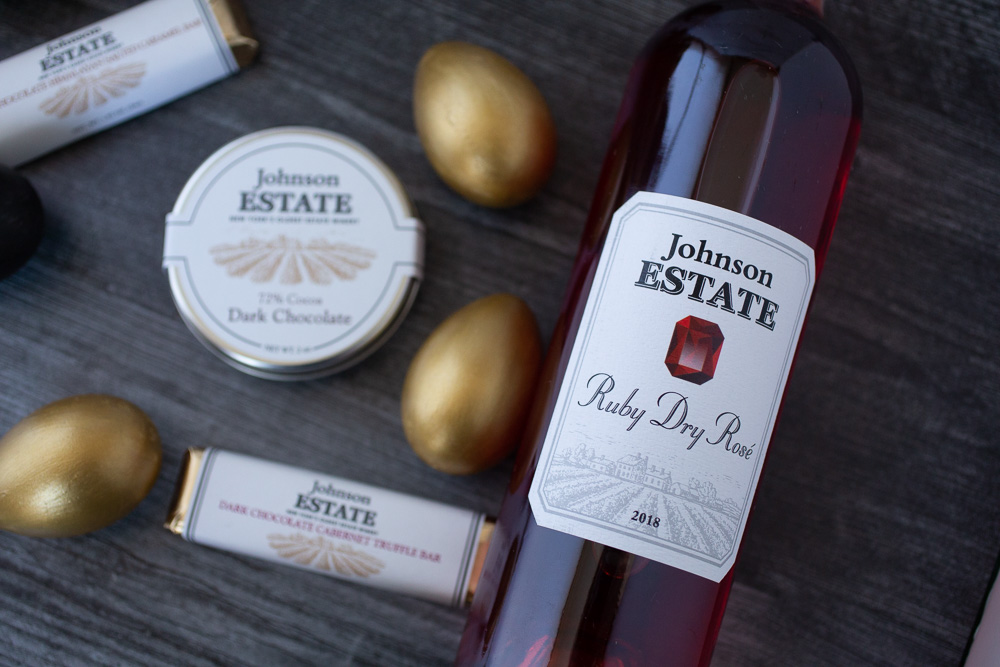
When people think of rosé wine, many still picture sweet pink wines from years past. Today’s dry rosés tell a different story.
Crisp, refreshing, and remarkably food friendly, dry rosé has become one of the world’s most popular wine styles. At Johnson Estate Winery in New York’s Lake Erie Wine Country, our Ruby Dry Rosé showcases everything that makes this style so enjoyable: bright fruit flavors, refreshing acidity, and a winemaking tradition that dates back centuries.
Every bottle begins with estate grown grapes, careful vineyard management, and thoughtful decisions made throughout the growing season.
Great wine begins in the vineyard.
Throughout the growing season, Winemaker Jeff Murphy and Farm Manager Fred Johnson regularly walk our vineyards together, monitoring vine health, fruit development, and ripeness. Their close collaboration helps determine not only when each vineyard block is harvested, but also how every grape variety will best express the character of the vintage.
Because Johnson Estate is an estate winery, every decision from vineyard to bottle is made with one goal: producing wines that reflect both our land and the growing season.
Ruby Dry Rosé is a perfect example of that philosophy.
For many years, Ruby Dry Rosé was produced from our estate grown Maréchal Foch using the traditional French saignée method.
Then came the 2024 harvest.
Our Maréchal Foch grapes developed exceptional color and concentration. While those qualities produced an outstanding red wine, they created a rosé that was darker and richer than the bright, refreshing style Winemaker Jeff Murphy envisioned.
Rather than forcing the wine to fit a recipe, Jeff adapted to the vintage.
He selected estate grown Chambourcin, a variety that offered vibrant ruby color, lively acidity, and expressive strawberry and cherry flavors while preserving the fresh style our guests have come to expect.
The result exceeded expectations, and after the success of the 2024 vintage, Chambourcin remained the foundation of Ruby Dry Rosé for 2025.
It’s one more example of how thoughtful winemaking begins with listening to the fruit.
One of the most common questions we receive is, “How is rosé wine made?”
Ruby Dry Rosé is crafted using the traditional French saignée (pronounced san yay) method. The word saignée means “to bleed.”
After our estate grown Chambourcin grapes are harvested and crushed, they spend a short period in contact with their skins. A portion of the lightly colored juice is then gently drawn, or “bled,” from the tank before extended skin contact occurs.
That juice is fermented separately to become Ruby Dry Rosé, while the remaining juice continues fermenting with the grape skins to create our estate grown Chambourcin red wine.
The result is a naturally vibrant dry rosé with fresh fruit aromas, crisp acidity, delicate structure, and beautiful ruby color.
Ruby Dry Rosé opens with inviting aromas of fresh strawberry and black cherry.
Bright strawberry and ripe cherry flavors carry across the palate, balanced by lively acidity and a clean, refreshing finish that makes every sip inviting.
With just 1% residual sugar, this is a true dry rosé that delivers expressive fruit without excessive sweetness.
One reason dry rosé continues to grow in popularity is its incredible versatility at the table.
Ruby Dry Rosé pairs beautifully with:
Whether you’re hosting a backyard cookout, relaxing on the patio, or enjoying dinner with friends, Ruby Dry Rosé is a wine that fits almost any occasion.
No two growing seasons are exactly alike.
Weather, sunshine, rainfall, and harvest conditions all influence the character of the fruit. At Johnson Estate Winery, we believe every vintage deserves to be evaluated on its own merits rather than following a fixed formula.
Our decision to transition Ruby Dry Rosé from Maréchal Foch to Chambourcin reflects that philosophy. By adapting to the fruit instead of forcing consistency, we’re able to produce a dry rosé that showcases the best qualities of each vintage while remaining true to the style our guests love.
That’s the advantage of estate grown winemaking.
If you enjoy dry rosé, Ruby Dry Rosé is just the beginning.
Johnson Estate Winery offers a collection of rosé wines, each crafted to showcase a different grape variety and winemaking style. Whether you’re looking for a crisp everyday rosé, a classic Provence inspired expression, or something to celebrate with, there’s a rosé for every palate.
Our rosé collection includes:
Each bottle reflects the same philosophy that guides every wine we produce: exceptional estate grown fruit, thoughtful vineyard management, and careful winemaking that allows each vintage to express itself naturally.
Whether you’re discovering dry rosé for the first time or searching for your next favorite bottle, we invite you to explore our complete collection of rosé wines and experience the diversity of New York wines from Johnson Estate Winery.
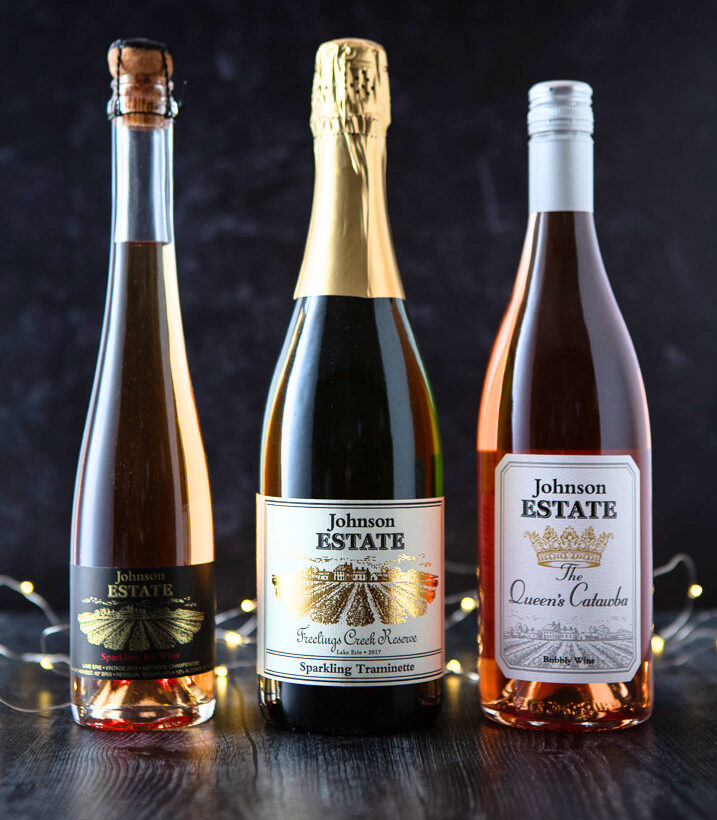
Johnson Estate Winery once again ranked among the top award-winning wineries in New York at the 2026 Finger Lakes International Wine & Spirits Competition, earning two Best of Class awards, multiple Gold Medals, and additional honors. As New York’s oldest estate winery, Johnson Estate continues to demonstrate the quality of wines produced in Lake Erie Wine Country through one of North America’s most respected wine competitions.
The 26th Annual Finger Lakes International Wine & Spirits Competition was another incredible success, featuring 1,100 entries from producers representing 40 U.S. states and Canadian provinces, and 7 countries.
Within that highly competitive field, Johnson Estate Winery submitted a selection of estate-grown wines and was once again honored with multiple top distinctions, including Best of Class recognitions and Gold medals across several categories.
This blind judging event, which benefits Camp Good Days, brings together a broad range of producers and evaluates each wine solely on its quality in the glass, without producer identity or reputation influencing results.
Once again, as has been the case in years past, Johnson Estate Winery is grateful to be recognized at the highest levels of the competition, with Sparkling Traminette and Ives both earning Best of Class honors in their respective categories.

For Sparkling Traminette, this year’s recognition marks a second Best of Class honor in 2026, following a 95-point Best of Class award at the Los Angeles International Wine Competition earlier this year.
This continues a strong performance history that also includes a Platinum Award at the 2025 Finger Lakes International Wine Competition, underscoring consistency across multiple vintages and judging panels.
Traminette itself holds an important place in New York wine history.
Developed through grape breeding research at Cornell University, Traminette was created as a hybrid offspring of Gewürztraminer, designed to capture aromatic intensity and floral character while offering improved cold-climate resilience. Johnson Estate Winery was among the early adopters of the varietal during its introduction and research phase in New York State, planting it at a time when its potential in the region was still being defined.
That early commitment has carried forward into today, where Traminette has become a signature expression within the estate portfolio.
At Johnson Estate Winery, Traminette is produced in two distinct styles. A traditional still version that highlights its floral aromatics and soft fruit character, and a sparkling version that lifts those same qualities into a brighter, more expressive format.
Both styles continue to perform strongly in competition and remain consistent favorites for their aromatic profile, balance, and approachability.
The continued success of Sparkling Traminette reflects both the varietal’s adaptability in New York’s climate and the long-term understanding of how it performs best within our estate vineyards.
The Ives also continues its strong performance, earning Best of Class recognition for the second year in a row at the Finger Lakes International Wine Competition.
Previously recognized in 2025, this semi-sweet wine has developed a loyal following among our wine club members for its approachable style and fruit-forward character. It is often compared to a Lambrusco in its refreshing, lightly sweet profile.
In addition to the still expression, Ives is also offered in a sparkling version known as The King’s Ives, which highlights a different expression of the same varietal character.
In addition to these Best of Class honors, several estate wines were awarded Gold medals, including Pink Catawba (2024 vintage), Toasted Oak Chardonnay (2023 vintage), Niagara (2024 vintage), Seyval Blanc (2024 vintage), and Dry Riesling (2024 vintage).
These results reflect strength across both native and European-style varietals as well as across multiple growing seasons.
Of particular note, several wines continue to demonstrate strong performance across major competitions.
Niagara recently earned a 99-point Gold Medal at the Los Angeles International Wine Competition, while Toasted Oak Chardonnay received a 90-point Gold Medal at the same competition, reinforcing their consistency across blind evaluations.
Much of this ongoing success can be traced back to a simple but important advantage: Johnson Estate Winery is fully estate grown.
Because we grow all of our own grapes, we are able to make harvest decisions on our own terms, picking each varietal at peak ripeness rather than based on logistics or external sourcing.
That timing is one of the most important factors in quality. Each block is harvested only when sugar, acidity, and flavor reach balance for that specific varietal and vintage. Those decisions are made in the vineyard, not the calendar, and are guided by continuous evaluation as the growing season progresses.
Under the care of third-generation owner Fred Johnson, the vineyard is managed with a long-term perspective that prioritizes balance, consistency, and varietal expression.
From there, Winemaker Jeff Murphy works with each lot in a way that emphasizes preservation of character rather than manipulation, allowing each vintage to reflect what the vineyard delivered in that specific year.
It is this continuity from vineyard to bottle that continues to show up in competition results year after year.
Recognition at major wine competitions reflects more than the quality of a single vintage. It highlights the strength of the region where the grapes are grown. Along the southern shore of Lake Erie, vineyards benefit from a growing environment shaped by the lake’s moderating influence, helping vines withstand winter temperatures while extending the growing season into the fall.
For generations, grape growers in this region have cultivated varieties uniquely suited to the area’s climate and soils. Today, that combination of agricultural heritage, vineyard experience, and careful winemaking continues to produce wines that stand out in blind tastings against entries from across North America and beyond.
These awards are a reflection of the work that takes place throughout the year. From pruning and vineyard management to harvest decisions and cellar practices. They also reinforce what visitors to our tasting room discover every day: exceptional wines can be found right here in Lake Erie Wine Country.
We are grateful to the judges, competition organizers, and, most importantly, the customers who continue to support New York wine and family-owned wineries. We invite you to visit us in Westfield, explore our award-winning portfolio, and experience firsthand the wines that earned recognition at the 2026 Finger Lakes International Wine & Spirits Competition.
All of these award-winning wines are available for purchase daily at the winery and online. Many are also available through our retail partners, which can be found using our store locator.
The Finger Lakes International Wine & Spirits Competition is one of the largest charitable wine and spirits competitions in North America. Wines are evaluated through blind tastings by industry professionals, providing an objective assessment of quality across a wide range of categories and regions.
Johnson Estate wines received recognition at both the 2026 Finger Lakes International Wine & Spirits Competition and the 2026 Los Angeles International Wine Competition. At the Finger Lakes competition, Sparkling Traminette and Ives each earned Best of Class honors, while wines including Semi-Dry Riesling, Niagara, Seyval Blanc, and Black Locust Riesling received Gold Medals. Earlier in the year, Sparkling Traminette, Semi-Dry Riesling, Sparkling Rosé Ice Wine, and Niagara were among the wines earning top honors at the Los Angeles International Wine Competition, highlighting the quality and diversity of Johnson Estate’s award-winning portfolio.
Visitors can enjoy Johnson Estate’s award-winning wines in the tasting room in Westfield, New York, located in the heart of Lake Erie Wine Country. Many of the wines recognized at the 2026 Finger Lakes International Wine & Spirits Competition are also available for purchase online and can be shipped to eligible states.

Looking for delicious peach wine recipes to enjoy this summer? Johnson Estate Passionate Peach is a sweet New York peach wine that makes the perfect base for refreshing summer cocktails, sangrias, iced teas, and sparkling drinks. Whether you’re hosting a backyard barbecue, relaxing on the patio, or planning a brunch with friends, these easy peach wine cocktails will help you make the most of every bottle.
From sparkling Bellinis to fruit-filled sangrias, here are six of our favorite summer wine cocktails featuring Johnson Estate Passionate Peach.
Sometimes the best peach wine recipe is the simplest one.
Serve a small glass of Passionate Peach at room temperature as a dessert wine, or enjoy it chilled on its own. For a festive summer treat, try mixing equal parts Passionate Peach and Johnson Estate Sparkling Traminette or May Wine for a lightly sparkling peach refresher.
This simple combination is perfect for enjoying on the patio after dinner or pairing with fresh fruit and desserts.
A peach-forward twist on the classic Bellini, this sparkling cocktail is ideal for brunches, celebrations, and summer gatherings.
Pour Passionate Peach into a champagne flute. Add peach juice or peach purée, then top with chilled Sparkling Traminette. Garnish with a peach slice or orange twist and serve immediately.
Pour peach juice and wine over ice in a high ball glass. Fill most of the way to the top with soda. Then slowly pour grenadine syrup into the glass. The grenadine syrup will sink to the bottom of the glass and then slowly rise.
In a food processor, combine all ingredients and blend until smooth. Pour into a chilled martini glass or a chilled margarita glass.
One of the easiest peach wine cocktails you’ll make all summer.
Fill a tall glass with ice. Pour equal parts Passionate Peach and your favorite brewed tea over the ice. Stir gently and garnish with a citrus slice.
The combination of tea and peach wine creates a refreshing drink that is perfect for warm afternoons.
This fruit-filled peach sangria recipe is ideal for entertaining family and friends.
Combine all ingredients in a large pitcher. Add plenty of ice and refrigerate until thoroughly chilled. Serve with additional citrus slices for garnish.
The bright citrus flavors complement the sweetness of the peach wine, creating a refreshing summer sangria.
A refreshing fusion of peach wine and herbal tea.
Bring water to a boil and steep tea bags for five minutes. Allow the tea to cool completely. Pour into a pitcher, add Passionate Peach and lemon juice, and stir. Serve over ice with lemon slices.
This easy summer wine cocktail is especially refreshing on hot days.
Fresh basil and peach create a surprisingly delicious combination in this unique peach wine recipe.
Combine sugar and water in a saucepan and simmer until the sugar dissolves. Remove from heat and add basil leaves. Allow the basil to steep for 30 minutes, then strain. Add fresh lime juice to create a basil limeade base. Mix with Passionate Peach and serve over ice.
Pour the mixture into an ice cream maker for a refreshing peach-basil sorbet that’s perfect for summer entertaining.
Bring tropical flavors to your backyard with this simple peach wine cocktail.
Combine Passionate Peach and coconut rum to taste. Serve over ice and garnish with a peach slice or pineapple wedge.
The coconut and peach flavors create a tropical-inspired drink that tastes like summer in a glass.
In an old fashioned glass, combine wine, bitters, and 1 peach slice. Muddle well to mix the ingredients and mash the fruit for its juice. Add bourbon and fill glass with ice. Add second peach slice and berries. Top with sparkling water and stir to combine.
Peach wine is a fruit-forward wine that highlights the natural sweetness and aroma of ripe peaches. It can be enjoyed on its own as a dessert wine or used as the base for refreshing cocktails, sangrias, and sparkling beverages.
Because of its vibrant fruit flavors and versatility, peach wine has become a favorite choice for summer entertaining. It pairs beautifully with fresh fruit, light desserts, brunch dishes, and warm-weather gatherings.
Produced at Johnson Estate Winery in Westfield, New York, Passionate Peach is a customer favorite that captures the flavors of summer in every glass.
Located in the heart of Lake Erie Wine Country, Johnson Estate is New York’s oldest estate winery and has been crafting wines from estate-grown grapes and fruit for generations. Visitors can enjoy Passionate Peach alongside award-winning Riesling, Chardonnay, Sparkling Traminette, Niagara, and many other wines available in our tasting room.
Whether you enjoy it chilled, mixed into a Bellini, blended into sangria, or served alongside dessert, Passionate Peach offers endless opportunities for summer sipping.
Plan your visit to Johnson Estate Winery and discover why Passionate Peach remains one of our most popular seasonal favorites.
While visiting Johnson Estate Winery, be sure to explore:
Here’s to a summer filled with great wine, great friends, and plenty of peach-inspired cocktails.
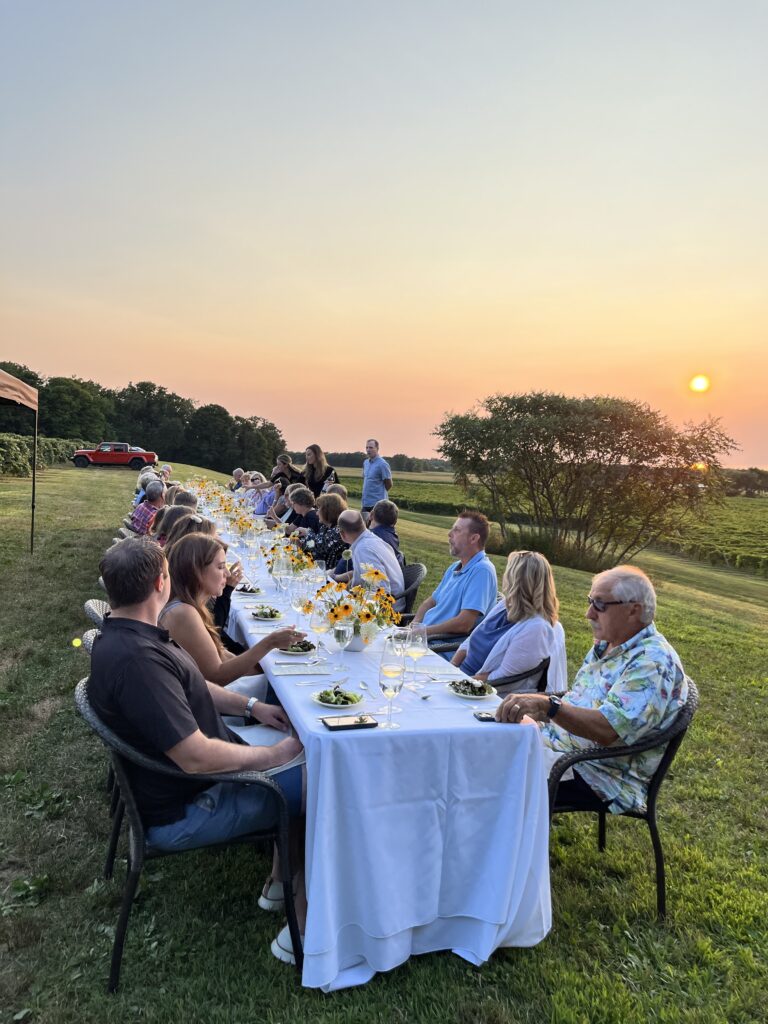
Looking for a memorable summer dining experience in Lake Erie Wine Country?
Johnson Estate Winery invites guests to enjoy three exceptional Winemaker’s Dinners during the summer of 2026. Located in Westfield, New York, just a short drive from Buffalo and Erie, Johnson Estate Winery offers one of the most unique food and wine experiences in Lake Erie Wine Country. Each event features a multi-course menu thoughtfully developed through collaboration between Winemaker Jeff Murphy and talented local culinary partners, with every course carefully paired to showcase the character of Johnson Estate’s award-winning wines.
From an elegant midsummer dinner within the estate gardens to breathtaking sunset views overlooking Lake Erie and a special celebration honoring 250 years of American history, each evening offers a unique opportunity to experience one of New York State’s most historic wineries in an intimate and unforgettable setting.
Whether you are a wine enthusiast, foodie, or simply looking for one of the best winery events in Western New York, these dinners bring together exceptional food, outstanding wines, and the beauty of the Lake Erie region.
At Johnson Estate Winery, a Winemaker’s Dinner begins with the wines.
Winemaker Jeff Murphy collaborates with talented local chefs and catering partners to create a multi-course dining experience where every course is designed to complement the wines being served. Each pairing is carefully considered to highlight the flavors, aromas, and character of both the food and the wine.
The result is more than a dinner, it is an opportunity to experience award-winning estate-grown wines in a setting that celebrates the vineyards, the season, and the rich agricultural heritage of Lake Erie Wine Country.
Set on the historic Johnson Estate grounds, this elegant evening celebrates the abundance of midsummer with a thoughtfully crafted multi-course menu paired with a selection of Johnson Estate wines chosen by Winemaker Jeff Murphy. Guests will enjoy an intimate dining experience that highlights fresh seasonal ingredients and the beauty of the estate during one of the most vibrant times of the year.
Whether you are a longtime supporter of Johnson Estate or discovering us for the first time, The Midsummer Winemaker’s Dinner offers the perfect opportunity to experience the winery in a unique and memorable way.
Few places in Western New York offer views as breathtaking as The Ridge at Johnson Estate.
Overlooking the vineyards and waters of Lake Erie, this annual Farm-to-Table Dinner has become one of our signature summer events. Guests will enjoy a multi-course meal featuring locally sourced ingredients and expertly paired Johnson Estate wines selected to enhance each course.
As the evening unfolds and the sun begins its descent over Lake Erie, diners will experience the beauty of our region while celebrating the farmers, growers, and artisans who contribute to its rich agricultural heritage.
This is summer in Lake Erie Wine Country at its finest.
This year’s September dinner offers a unique opportunity to celebrate both the harvest season and a significant milestone in our nation’s history.
Held atop The Ridge overlooking Lake Erie, this special evening commemorates 250 years of American heritage through exceptional food, award-winning wines, and a setting that reflects the agricultural traditions that have shaped our region for generations.
Guests will enjoy a carefully curated multi-course menu paired with Johnson Estate wines while gathering with friends and fellow wine lovers to celebrate the land, the people, and the history that connect us all.
It promises to be one of the most memorable evenings of the year.
A Winemaker’s Dinner offers a unique opportunity to experience wine the way it was intended to be enjoyed. Through carefully curated food and wine pairings, guests discover how flavors interact and complement one another while learning more about the wines, vineyards, and winemaking process.
At Johnson Estate Winery, these dinners provide an opportunity to connect with one of New York State’s oldest continuously operating estate wineries while enjoying exceptional hospitality in the heart of Lake Erie Wine Country.
Fresh off a remarkable showing at the 2026 Los Angeles International Wine Competition, where Johnson Estate earned four Best of Class awards along with numerous Gold and Silver Medals, these dinners offer guests an opportunity to experience many of the wines that continue to earn recognition on the national stage.
A Winemaker’s Dinner is a multi-course dining experience where each course is paired with wines selected to complement the flavors of the menu.
Johnson Estate Winery is located in Westfield, New York, in the heart of Lake Erie Wine Country.
Yes. Seating is limited, and tickets are required for all three events. The price per person is $125. Wine club members receive a 10% discount on tickets.
Winemaker Jeff Murphy collaborates with local culinary partners to curate the wine selections and pairings for each dinner.
Wine selections vary by event and may include a variety of Johnson Estate’s award-winning estate-grown wines. Each course has at least one wine paired with it. In some cases, dinners will also showcase a vertical tasting of multiple vintages.

If you’ve ever picked up a bottle of wine and noticed the words “Estate Grown” or “Estate Bottled,” you may have wondered what those terms actually mean. Are they simply marketing phrases, or do they tell you something meaningful about what’s inside the bottle?
The answer is yes! They matter.
In fact, “Estate Bottled” is one of the most tightly regulated claims a winery can place on its label. It tells you that the winery has maintained control over the wine from the vineyard to the bottle, rather than purchasing grapes or finished wine from outside sources. The requirements are established by the U.S. Alcohol and Tobacco Tax and Trade Bureau (TTB), ensuring the designation represents far more than clever branding.
At Johnson Estate Winery, we’ve built our reputation around that philosophy for more than 65 years. As New York’s oldest estate winery, we’ve spent generations growing grapes, crafting wines, and welcoming guests to experience firsthand what it means for a wine to truly come from the land where it was born.

An estate winery is a winery that grows its own grapes and produces its wines on-site.
Unlike wineries that purchase grapes or bulk wine from other growers, estate wineries oversee every step of the winemaking process—from pruning the vines in winter to bottling the finished wine.
For a wine to legally carry the designation “Estate Bottled,” federal regulations require that:
These regulations provide consumers with confidence that the winery was responsible for the entire production process.
You may have noticed names like Lake Erie, Finger Lakes, or Napa Valley on wine labels. These are examples of American Viticultural Areas, commonly called AVAs.
An AVA is an officially recognized grape-growing region defined by unique geographical and climatic characteristics that influence how grapes are grown. The TTB establishes these boundaries to help consumers better understand where a wine comes from and the conditions that shaped it.
Because estate bottled wines must come entirely from vineyards within the same AVA as the winery, the designation also reinforces a genuine connection between the wine and its place of origin.
Johnson Estate Winery is proud to be located within the Lake Erie AVA, where the moderating influence of Lake Erie creates one of the longest growing seasons in the eastern United States. This unique climate allows our grapes to develop exceptional balance, vibrant acidity, and complex flavors. Want to learn more about what makes our region so special? Read our guide to the Lake Erie AVA and discover why it’s one of New York’s premier wine-growing regions.
Wine begins long before grapes reach the crush pad.
The decisions made throughout the growing season have an enormous impact on the finished wine. At estate wineries, the vineyard and winemaking teams work together from the earliest stages of the growing cycle, making careful decisions with the final wine in mind.
Estate wineries oversee practices such as:
These choices influence everything from acidity and ripeness to aroma, flavor, structure, and aging potential.
Because the vineyard and winery operate as one team, estate wineries can focus on producing the highest-quality fruit possible rather than simply maximizing yields. Every vine receives attention, and every harvest decision is made based on what will create the best expression of the vineyard.
At Johnson Estate Winery, this connection between vineyard and winery is strengthened by the close collaboration between our Farm Manager, Fred Johnson, and Winemaker, Jeff Murphy. Throughout the entire growing season, Fred and Jeff are in constant communication, discussing vine development, fruit maturity, weather conditions, and the best practices to help each variety reach its full potential.
That collaboration allows decisions in the vineyard to be made with the finished wine in mind. From adjusting vineyard practices during the growing season to determining the ideal time to harvest, the shared knowledge between the person caring for the vines and the person crafting the wine helps ensure that every bottle reflects the character and quality of our estate.
Our estate-grown Pinot Noir is a perfect example of how this vineyard-first approach can make a difference. Pinot Noir is one of the world’s most celebrated—and challenging—grape varieties. Its thin skins, tight clusters, and sensitivity to growing conditions require careful attention throughout the season.
Through meticulous vineyard management, selective harvesting, and the collaboration between our vineyard and winemaking teams, Johnson Estate has been able to showcase the potential of Pinot Noir grown in the Lake Erie AVA.
Discover how our estate-grown Pinot Noir has earned recognition among New York’s finest wines.
Owning and farming vineyards requires significant investment.
It also gives wineries the freedom to prioritize quality.
Rather than purchasing fruit harvested to meet a contract, estate wineries can decide exactly when grapes should be picked based on weather, ripeness, acidity, and flavor development.
Some years, that may even mean harvesting fewer grapes to produce better wine.
That philosophy is one of the defining characteristics of estate wineries around the world.
Since 1961, Johnson Estate Winery has been farming grapes along the southeastern shore of Lake Erie.
Today, our family continues that tradition as New York’s oldest estate winery.
Our estate includes 113 acres of vineyards, where we grow 13 grape varieties suited to the unique climate of Lake Erie Wine Country.
Lake Erie’s moderating influence creates a longer growing season than many regions at similar latitudes, allowing grapes to develop balanced acidity while achieving excellent flavor maturity.
Every vintage begins in these vineyards.
Our vineyard and winery teams work together throughout the growing season, monitoring vine health, evaluating ripeness, and determining the ideal harvest date for each variety.
Once harvested, those grapes travel only a short distance—from the vineyard to our winery—where they’re crushed, fermented, aged, bottled, and prepared for guests to enjoy.
It’s a process we’ve refined over more than six decades.
Reading about estate winemaking is one thing.
Walking through the vineyards where it happens is another.
During the summer months, Johnson Estate offers guided Estate Tours, where guests can explore our vineyards, learn about grape growing, visit the winery, and discover how wine travels from bud to bottle.
The experience concludes with a charcuterie and a glass of wine at FLIGHT, our outdoor tasting venue overlooking the estate.
There’s no better way to understand what an estate winery is than to stand among the very vines that produced the wine in your glass.
An estate winery grows its own grapes and produces its wine on-site, maintaining control over the entire winemaking process from vineyard to bottle.
“Estate Bottled” is a federally regulated term. It means the grapes were grown on vineyards owned or controlled by the winery, located within the same AVA, and that the wine was crushed, fermented, aged, and bottled on the winery’s premises.
Not necessarily, but estate wineries have greater control over grape growing and winemaking, allowing them to focus on quality, consistency, and expressing the character of their vineyards. Many wine professionals view estate wines as a reflection of both place and craftsmanship.
Johnson Estate is proud to be New York’s oldest estate winery, with more than 65 years of growing grapes, producing wines, and welcoming visitors to experience estate winemaking in the heart of Lake Erie Wine Country.
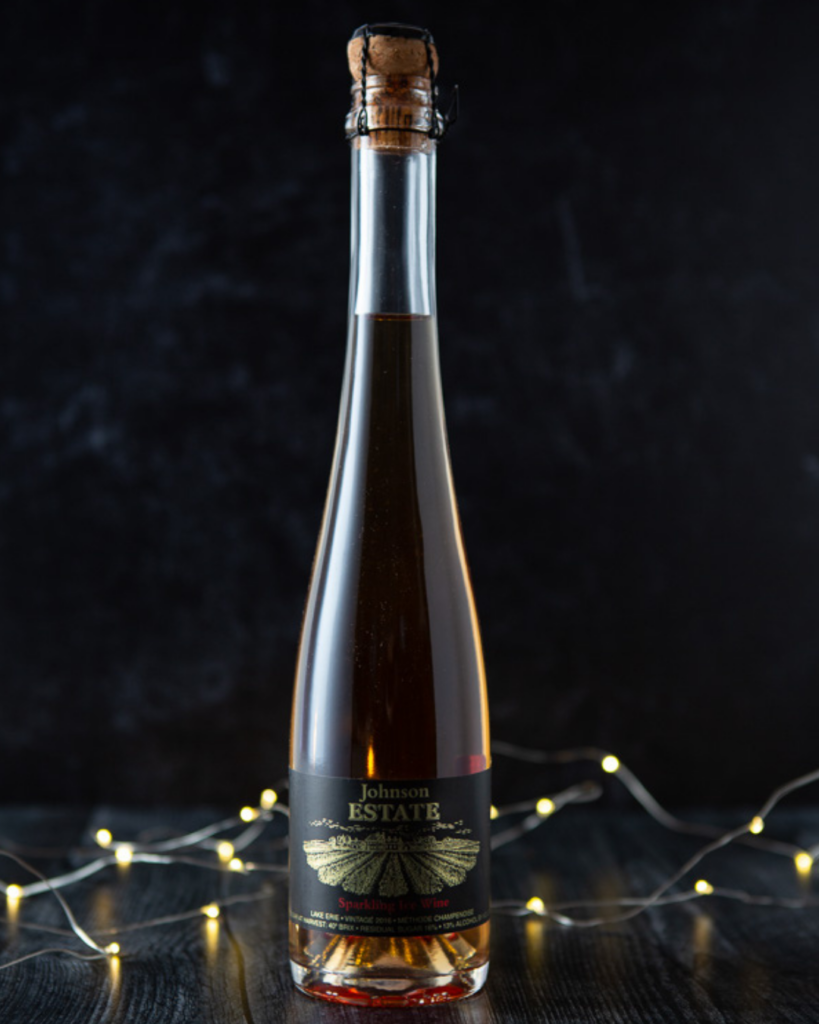
In the world of New York wines, few styles are as rare, labor intensive, or climate dependent as true ice wine. Now, Johnson Estate Winery, New York’s oldest estate winery, has released the second vintage of its Sparkling Rosé Ice Wine, believed to be the only known Méthode Champenoise sparkling ice wine produced in North America.
Crafted in the heart of Lake Erie Wine Country, this remarkable wine combines the tradition of authentic ice wine production with the elegance and complexity of traditional Méthode Champenoise winemaking.
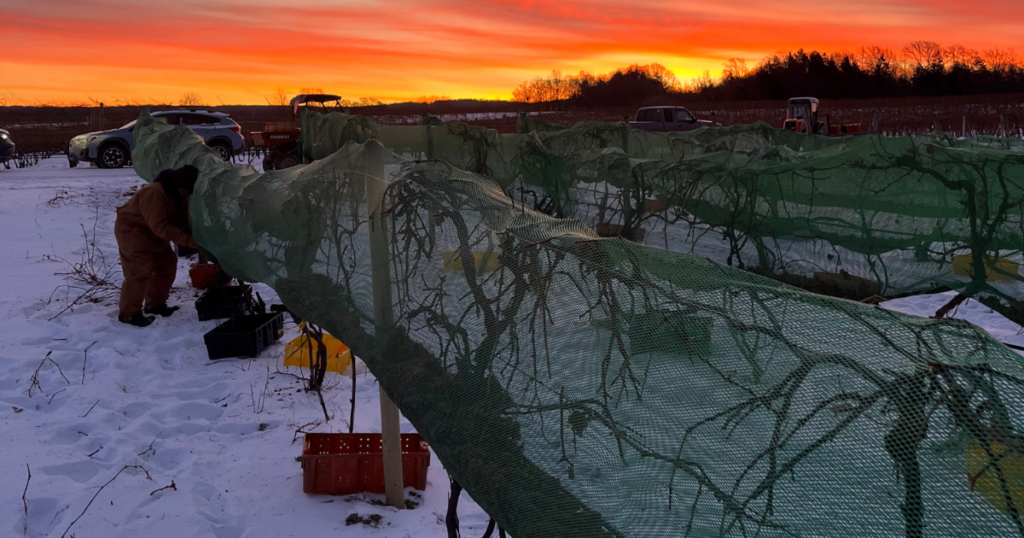
Ice wine is one of the most difficult and weather dependent wines produced anywhere in the world. Unlike late harvest wines, authentic ice wine can only be made when grapes freeze naturally on the vine during winter temperatures below freezing.
At Johnson Estate Winery, Vidal Blanc and Chambourcin grapes remain hanging in the vineyard well into winter, waiting for the precise moment when nature delivers the necessary cold conditions. Harvest crews often work through Lake Erie snowstorms, bitter winds, and single digit temperatures to bring in the frozen fruit before sunrise.
When pressed frozen, the grapes release only a tiny amount of highly concentrated juice bursting with natural sweetness, acidity, and flavor intensity. The result is one of the most luxurious dessert wine styles produced in New York State wine country.
The Lake Erie region is one of the few places in the world capable of producing true ice wine consistently. Alongside the Finger Lakes, Niagara Peninsula, Germany, and Austria, western New York possesses the ideal balance of vineyard climate and winter conditions necessary for ice wine production.
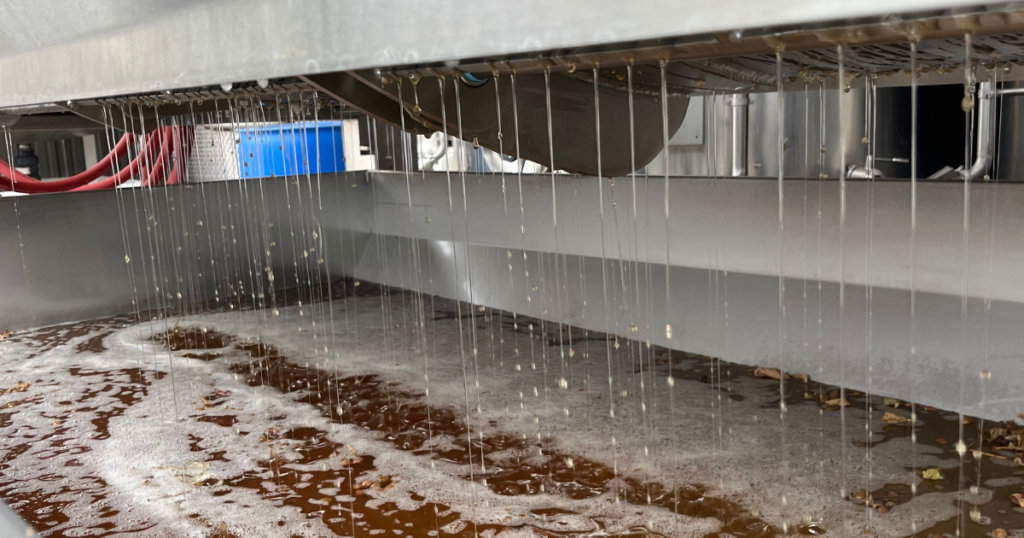
Sparkling ice wine is exceptionally uncommon because it combines two highly specialized winemaking methods into one bottle.
Johnson Estate Winery currently produces three different New York Ice Wines. Its Vidal Blanc Ice Wine and Chambourcin Ice Wine are traditional still ice wines, crafted without bubbles and celebrated for their rich concentration, sweetness, and intense fruit character. The winery’s Sparkling Rosé Ice Wine takes that tradition one step further by transforming authentic ice wine into a sparkling wine using the Méthode Champenoise process.
Traditional ice wine fermentation is already difficult due to the juice’s naturally high sugar concentration. Creating a sparkling version using the Méthode Champenoise process, the same bottle fermented method used in Champagne, adds another layer of complexity and craftsmanship.
Johnson Estate’s Sparkling Rosé Ice Wine undergoes secondary fermentation directly in the bottle, producing delicate natural bubbles and refined texture. Every bottle is carefully riddled, disgorged, dosed, and hand finished in 375ml bottles.
The finished wine offers vibrant fruit character, elegant effervescence, balanced sweetness, and bright acidity that keeps the wine lively and refreshing.
For wine enthusiasts exploring premium New York wines and unique sparkling wines, this release represents one of the rarest wine styles currently produced in North America.
The inspiration for Johnson Estate’s Sparkling Rosé Ice Wine began after winery owner Fred Johnson and winemaker Jeff Murphy visited Canada’s Niagara wine region and experienced sparkling ice wines firsthand.
Inspired by the possibilities of combining traditional sparkling winemaking with authentic ice wine, the winery began developing its own version using Johnson Estate grown grapes and Méthode Champenoise production techniques.
The result is a wine that highlights both the innovation of New York State wines and the unique winter terroir of Lake Erie Wine Country.
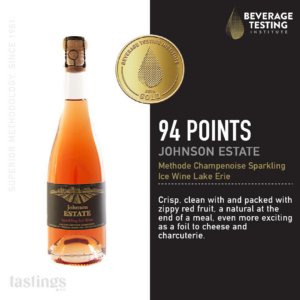
The newly released vintage has already earned national and international recognition.
Recently reviewed by Tastings.com, the wine received a Gold Medal and outstanding 94 point rating, praised for its balance, complexity, and refined sparkling character.
Now, the wine has also been recognized by Decanter Magazine, where reviewer Maiah Johnson awarded it 90 Points and described it as:
“A rosy, copper-colored sparkling ice wine by Johnson Estate with delicate bubbles that lift the wine’s sweetness. Honeyed fruit and dried herbal aromatics on the nose give way to orange blossom, macerated strawberries with cream, ruby red grapefruit, and apricot. Crafted from a blend of 75% Chambourcin and 25% Vidal Blanc that were frozen on the vine at harvest, then treated in the traditional method style.”
The review also highlighted the wine’s traditional method production and unique blend of 75% Chambourcin and 25% Vidal Blanc, with the grapes naturally frozen on the vine before harvest.
Together, these recognitions further establish Johnson Estate’s Sparkling Rose Ice Wine as one of the most distinctive sparkling dessert wines produced in New York State and America.
From frozen vineyard harvests during Western New York winters to the intricate bottle fermentation process used to create its fine bubbles, Johnson Estate’s Sparkling Rosé Ice Wine reflects the craftsmanship, climate, and innovation that continue to define the best New York wines.
For those seeking a truly distinctive New York dessert wine experience, this sparkling ice wine offers a rare opportunity to taste one of the most unique New York State wines being produced today.
To explore the winery’s current releases and learn more by planning a visit to Johnson Estate please visit our “Plan Your Visit Page.” The Sparkling Rose Ice Wine is also available for purchase in our online store.
Sparkling ice wine is a rare dessert wine made from naturally frozen grapes that undergo a secondary fermentation to create bubbles. Johnson Estate’s Sparkling Rosé Ice Wine combines traditional ice wine production with the Méthode Champenoise sparkling process, creating a sweet yet refreshing sparkling dessert wine with elegant bubbles and vibrant fruit character.
Ice wine is a specialty dessert wine made from grapes that freeze naturally on the vine during winter. The frozen grapes are harvested and pressed while still frozen, producing a small amount of intensely concentrated juice with rich sweetness, bright acidity, and bold fruit flavors.
Unlike many sweet wines, authentic ice wine relies entirely on natural freezing conditions rather than artificial freezing methods.
New York ice wine is unique because only a few regions in the world consistently experience the precise winter conditions required to produce true ice wine. Regions like Lake Erie Wine Country and the Finger Lakes benefit from cold winters and lake influenced climates that allow grapes to freeze naturally on the vine.
These conditions help produce balanced ice wines with both concentrated sweetness and refreshing natural acidity.
Johnson Estate Winery has a total of 13 Varieties of grapes on the Estate. However, only two are used for producing our three different ice wines, Vidal Blanc and Chambourcin grapes.
The winery’s Vidal Blanc Ice Wine and Chambourcin Ice Wine are traditional still ice wines without bubbles. Its Sparkling Rosé Ice Wine uses those same ice wine traditions while incorporating the Méthode Champenoise sparkling process to create delicate natural effervescence.
Méthode Champenoise is the traditional sparkling wine production method where secondary fermentation occurs directly inside the bottle. This process creates natural carbonation and fine bubbles.
Johnson Estate’s Sparkling Rosé Ice Wine is crafted using this traditional bottle fermented technique, which includes riddling, disgorging, dosage, and hand finishing each bottle.
Yes, sparkling ice wine is considered a dessert wine and naturally contains sweetness from the concentrated frozen grape juice. However, the wine’s bright acidity and sparkling bubbles help balance the sweetness, creating a lively and refreshing finish rather than a heavy or syrupy texture.
Sparkling ice wine is extremely rare because it combines two difficult winemaking processes. Authentic ice wine production requires specific winter weather conditions, while Méthode Champenoise sparkling production requires extensive time, labor, and technical precision.
Very few wineries in the world produce sparkling ice wine, and Johnson Estate’s Sparkling Rosé Ice Wine is believed to be the only known Méthode Champenoise sparkling ice wine currently produced in North America.
Johnson Estate Winery is located in Westfield along the shores of Lake Erie in western New York’s Lake Erie Wine Country region. The area’s cold winters and lake effect weather help create ideal conditions for producing authentic New York ice wine.
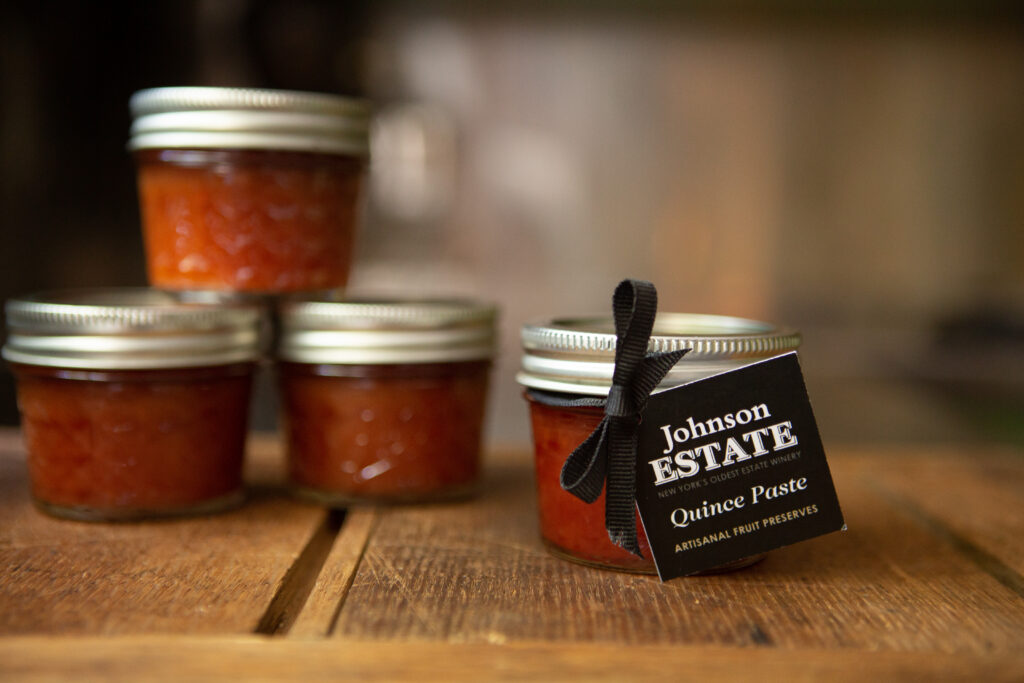
Quince paste, known as dulce de membrillo in Spain, is a rich, sliceable fruit preserve made from quince, an old-world fruit prized for its floral aroma and sweet-tart flavor. Traditionally paired with Manchego cheese and wine, quince paste has long been enjoyed throughout Europe and is becoming increasingly popular on modern cheese and charcuterie boards.
At Johnson Estate Winery in Lake Erie Wine Country, quince has a long family history dating back generations. Today, the winery not only crafts house-made quince paste from estate-grown fruit, but also offers it for purchase in the tasting room and online store.
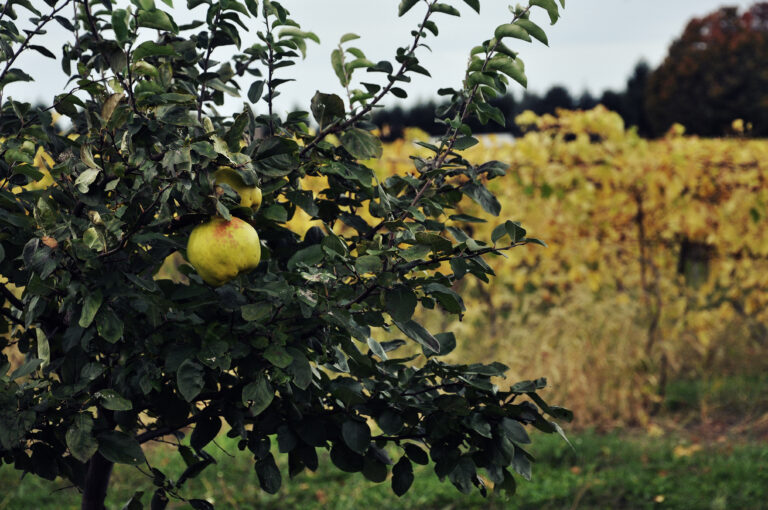
Quince trees (Cydonia oblonga) belong to the apple, or “pome,” family and are native to the Caucasus Mountains of Georgia, Armenia, and northern Iran. The fruit is typically apple- or pear-shaped with green skin that turns bright yellow as it ripens.
Unlike apples or pears, quince is usually too firm and tart to eat raw. However, when cooked, the fruit transforms dramatically. Its pale flesh softens and develops a beautiful ruby-red color along with a fragrant floral flavor that makes it ideal for jams, jellies, preserves, and quince paste.
Because quince is naturally high in pectin, it creates a thick, smooth texture perfect for slicing and serving alongside cheese or charcuterie boards.
Quince paste has a unique flavor that combines sweetness, tartness, and floral aromas with subtle notes reminiscent of apples, pears, and citrus. Its dense texture allows it to be sliced and served neatly on cheese boards or charcuterie platters.
The balance of fruitiness and acidity makes quince paste an excellent companion for both savory cheeses and crisp white wines. Many food lovers also enjoy quince paste as part of charcuterie boards or paired with crackers and cured meats.
To serve quince paste, gently loosen it from the jar using a small knife and place it on a plate, charcuterie board, or cheese tray. The paste will hold its shape and can easily be sliced into small portions.
In Spain, quince paste is traditionally paired with Manchego cheese, a firm sheep’s milk cheese with a slightly salty flavor. However, quince paste also complements a wide variety of cheeses ranging from sharp cheddars to creamy goat cheeses.
Quince paste pairs wonderfully with cheeses available throughout Western New York and Lake Erie Wine Country, including:
Local favorites recommended at Johnson Estate include cheeses from Reverie Creamery, including Gitane, Tom, and Palimino varieties.
The sweet-tart flavors of quince paste pair beautifully with a variety of wines. One favorite pairing at Johnson Estate Winery is estate-grown Vidal Blanc, whose bright fruit and acidity complement the floral richness of quince.
Quince paste also works well with:
Visitors to Johnson Estate Winery can purchase house-made quince paste directly from the winery tasting room or online store. Made from estate-grown quince harvested from the winery orchard, this traditional Spanish-style membrillo is crafted specifically to pair with wine, cheese, and charcuterie.
Quince paste reflects the agricultural traditions and culinary heritage that continue to shape Lake Erie Wine Country today. From historic orchards to handcrafted wine pairings, Johnson Estate continues to celebrate old-world flavors while offering visitors a unique tasting experience in Western New York.
Whether served with cheese, wine, crackers, or charcuterie, quince paste offers a delicious way to experience one of the region’s lesser-known orchard fruits.
Quince paste is made by slowly cooking quince fruit with sugar until it becomes thick, smooth, and sliceable.
Quince has a sweet-tart, floral flavor with notes similar to apple, pear, and citrus when cooked.
Manchego is the traditional pairing, but quince paste also pairs well with cheddar, Parmesan, goat cheese, and other hard or soft cheeses.
Most quince varieties are too hard and tart to eat raw and are typically cooked before serving.
Crisp white wines like Vidal Blanc, Riesling, and sparkling wines pair especially well with quince paste.
8419 West Main Rd. (Route 20)
Westfield, NY 14787
Map & Directions
March – October
10am-6pm Daily
November – February
10am-5pm Sunday-Thursday
10am-6pm Friday & Saturday
Closed Thanksgiving, Christmas, New Year’s Day, and Easter
Keep up to date on the latest wine releases, events, and promotions!